
Craigdarroch Castle A Victorian Dream Born of Coal and Courage

Craigdarroch Castle: A Victorian Dream Born of Coal and Courage
The Rags-to-Riches Tale of Robert and Joan Dunsmuir on Vancouver Island
In the heart of Victoria, British Columbia, perched atop a hill with views of the city and sea, stands Craigdarroch Castle, an architectural marvel and enduring symbol of ambition, love, and legacy.
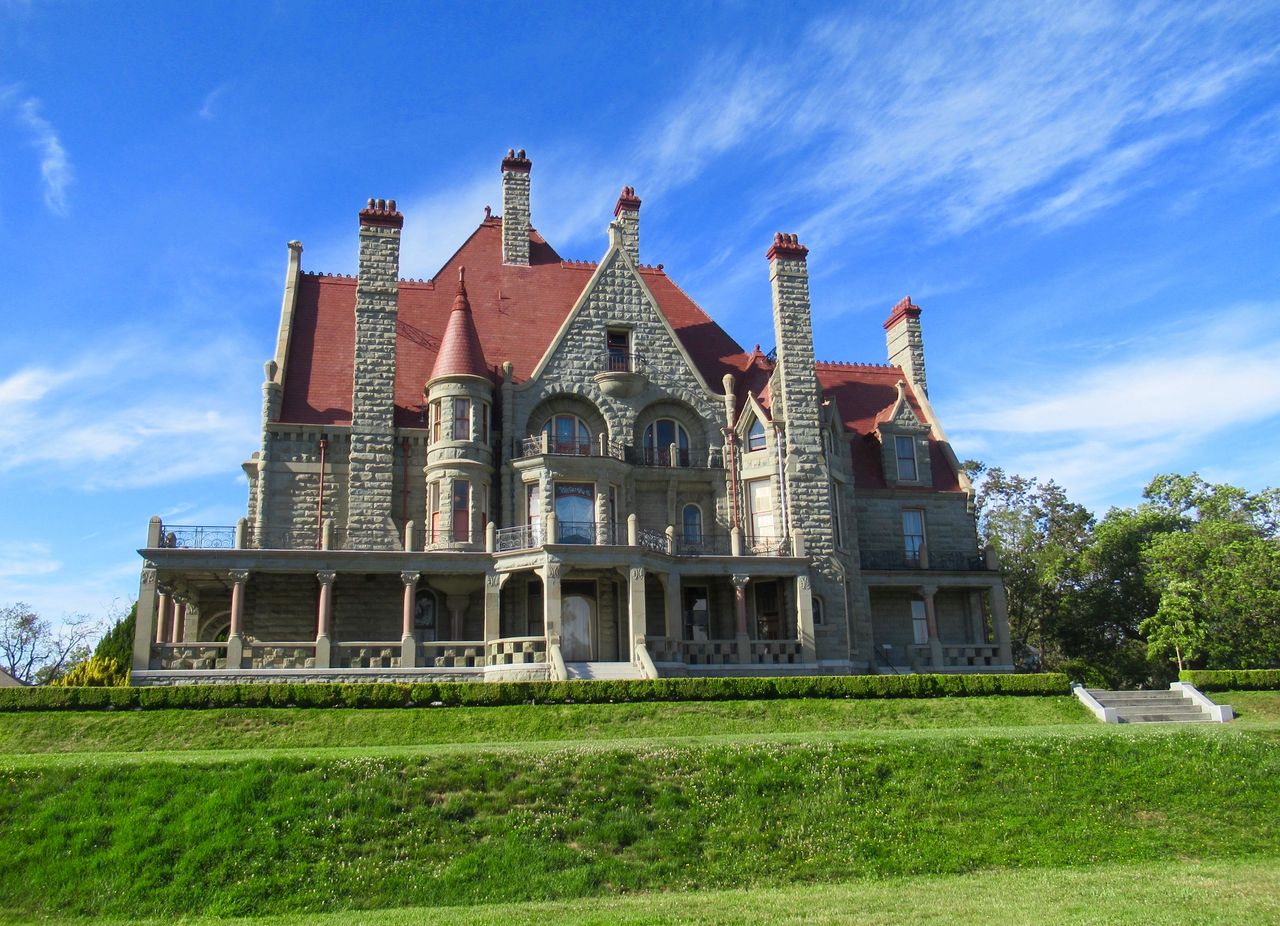
But the castle’s story is far more than cut stone and stained glass. It is the tale of a young Scottish couple, Robert and Joan Dunsmuir, who dared to dream across oceans, who braved the unknown for opportunity, and who left behind a monument not just to wealth, but to vision and family.
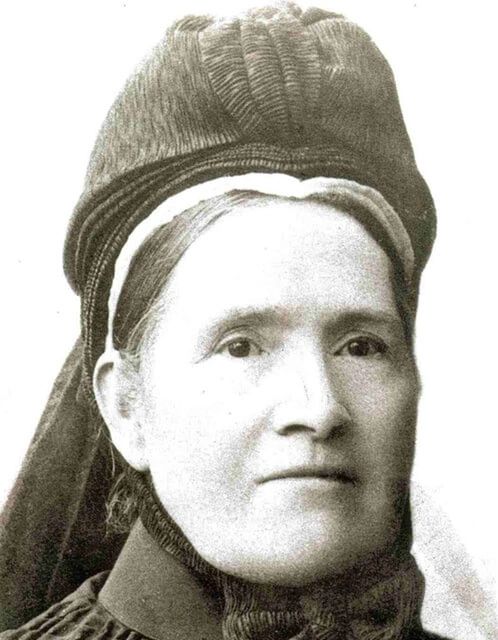
From Saltcoats to Fort Victoria: A Promise Made
Robert Dunsmuir was born in 1825 in Hurlford, Ayrshire, Scotland, the son of a coal miner. Like his father, Robert entered the mines at a young age, learning not just the labor of coal extraction but the nuances of the business. Despite the daily hardship of life underground, Robert possessed a sharp mind and a tireless work ethic that would eventually shape the industrial future of Vancouver Island.
He married Joan Olive White, the daughter of his employer, and the young couple soon found themselves at a crossroads. With opportunities in Scotland limited and the promise of colonial development across the Atlantic calling, Robert made Joan a vow: “Come with me to Vancouver Island, and I’ll build you a castle.”
It was a bold promise, especially considering that Robert was heading not to a bustling city, but to the remote, forested frontier of the British Empire. In 1851, with little more than their hopes and determination, the Dunsmuirs and their two young sons boarded a ship bound for the west coast of North America. The journey, via Cape Horn, took months and was anything but comfortable battling rough seas, illness, and the uncertainty of what lay ahead. Joan, pregnant with their third child, endured it all, clinging to her husband’s promise and the dream of a better life.
Settling in First Victoria
Upon arrival in Fort Victoria, then a fur trading post governed by the Hudson’s Bay Company, the Dunsmuirs faced the harsh realities of colonial life. They settled into modest lodgings, and Robert took work as a miner in the company’s operations in Nanaimo, a new coal outpost north of Victoria. His skills quickly stood out, and he was soon promoted. With growing experience and a reputation for being shrewd and resourceful, Robert branched out on his own.
In 1869, he made a discovery that would change the course of his life and that of Vancouver Island forever. He struck a rich coal seam in Wellington, near Nanaimo, and staked his claim. What followed was a meteoric rise from employee to entrepreneur. Robert Dunsmuir founded his own mining company and became one of the wealthiest men in British Columbia, employing hundreds of workers and exporting coal around the Pacific Rim.
By the 1880s, the Dunsmuir family had grown. Robert and Joan had 10 children, 6 daughters and 4 sons and were one of the most prominent families in the colony. They moved back to Victoria, purchasing land and establishing themselves as part of the city’s elite. And then, Robert remembered his promise.
Building the Castle in the Sky
Construction of Craigdarroch Castle began in 1887, on a hillside estate of nearly 28 acres overlooking Victoria. The name “Craigdarroch,” Gaelic for “rocky oak place,” was a nod to their Scottish roots. Designed by Portland architect Warren Heywood Williams, the structure was an ambitious undertaking, a baronial mansion in the Richardsonian Romanesque style, complete with massive granite stonework, turrets, towers, and arched windows.
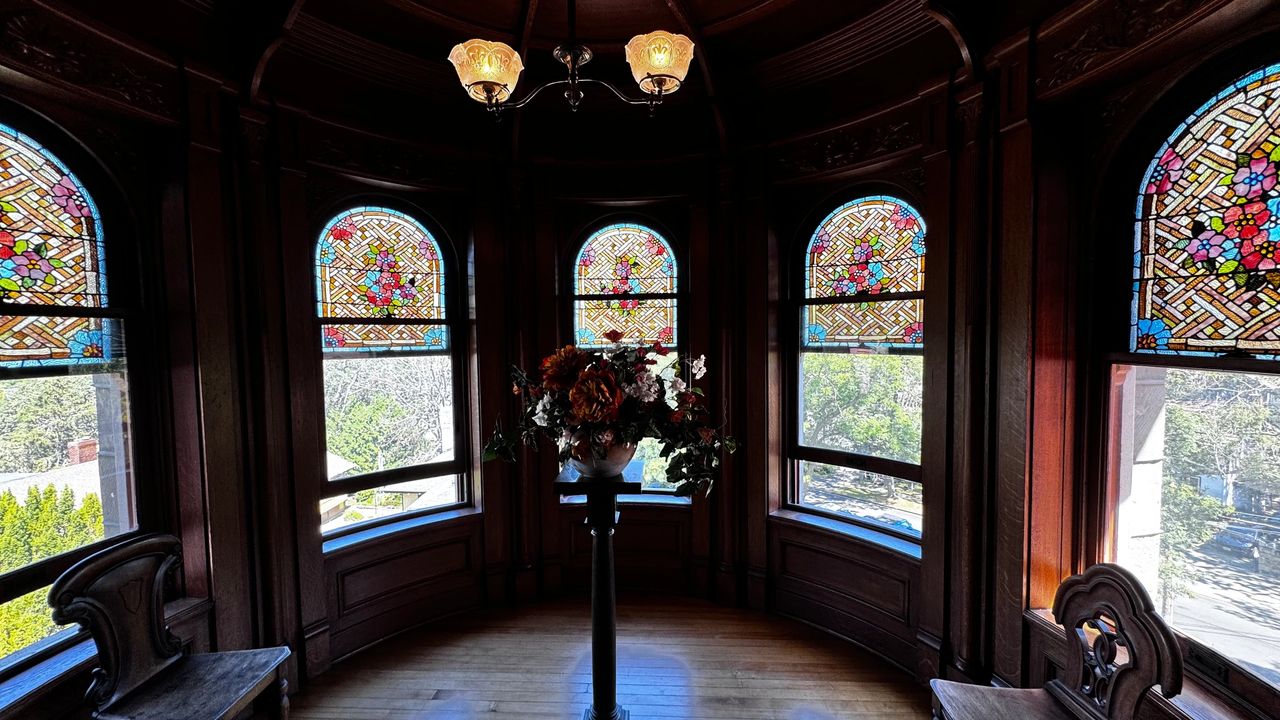
Inside, the castle would boast 39 rooms, 17 fireplaces, and a grand oak staircase that spirals four stories from the entrance to the tower. The stained-glass windows, parquet floors, and intricately carved woodwork were crafted from the finest materials of the time, imported from around the world. Every detail reflected the Dunsmuirs’ wealth, status, and determination to create a home of lasting legacy.
But the house was not merely a display of riches. It was meant to be a family home—a castle Joan could call her own, filled with music, conversation, and grandchildren running through the halls.
Tragically, Robert would never live to see it completed.
A Promise Partially Fulfilled
Robert Dunsmuir died unexpectedly in 1889, two years before Craigdarroch Castle was finished. He was 64 years old. His death sent shockwaves through British Columbia, where he was not only a business titan but a political figure serving in the provincial legislature and championing infrastructure development, including the controversial E&N Railway.
He died one of the richest men in Western Canada.
After his death, Joan took charge of completing the castle. A strong and capable woman, she oversaw the remaining construction with care, determined to honour the legacy of the man who had made her a castle promise so long ago. By 1890, she and several of her daughters moved into the fully furnished mansion.
Inside the Castle Walls
Today, Craigdarroch Castle is a National Historic Site and one of Victoria’s most treasured landmarks, offering visitors a glimpse into the opulence of the Victorian era and the personal story of the Dunsmuir family.
Visitors to the castle will find:
- The Grand Staircase: A magnificent, hand-carved staircase that winds gracefully to the upper floors. There is no elevator, and guests climb by foot just as the family once did to reach each of the four levels.
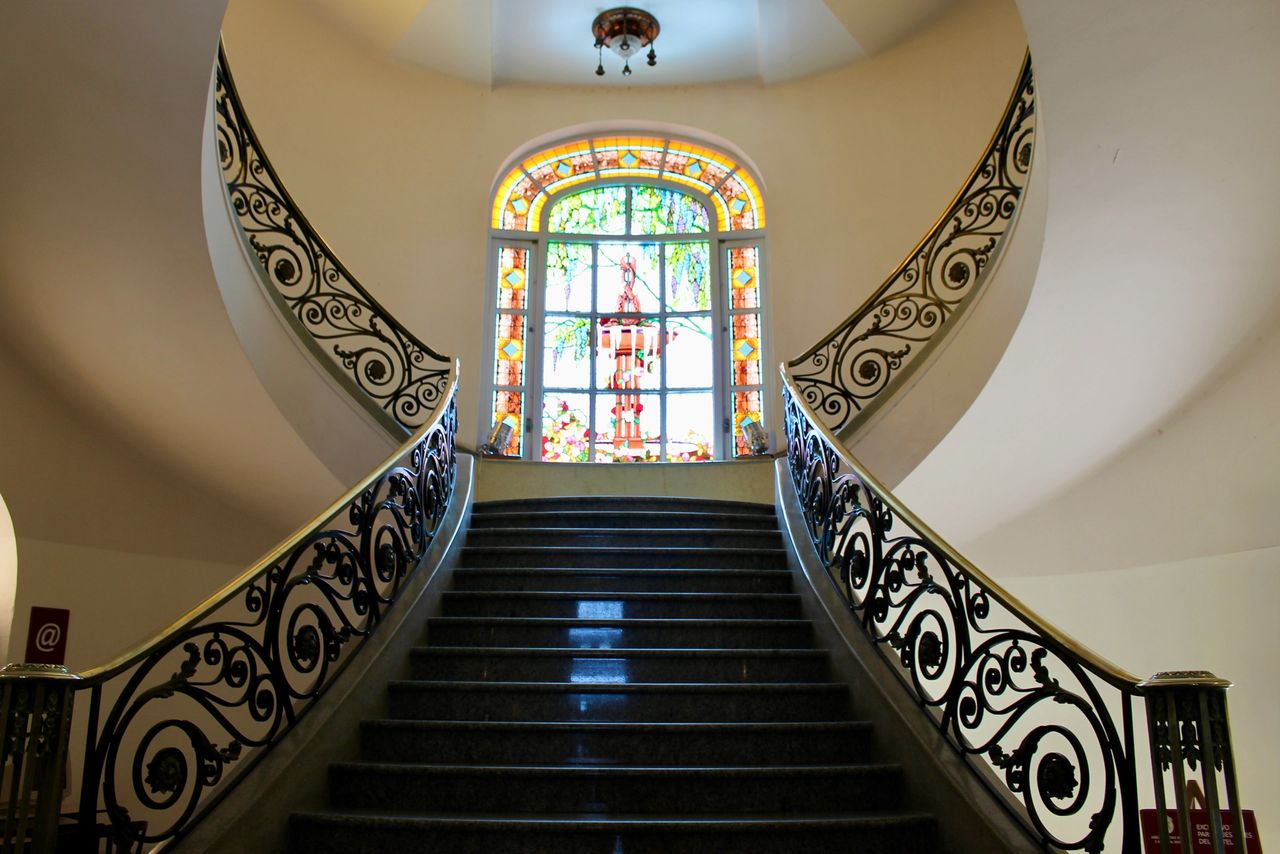
- Period Rooms: Lavishly decorated parlours, bedrooms, and the library are filled with late 19th-century furniture and decor, much of it reflective of the style and tastes of the Dunsmuirs.
- Stained Glass and Woodwork: Rich walnut and oak panelling, intricate plaster ceilings, and dazzling stained-glass windows capture the craftsmanship of the era.
- The Tower View: At the top, a small lookout provides panoramic views of Victoria, the Juan de Fuca Strait, and the Olympic Mountains beyond, perhaps the very view that Robert dreamed of giving Joan.
The castle’s mood is both grand and intimate. One can easily imagine the laughter of dinner parties echoing through the drawing room or the quiet footsteps of Joan pacing its halls in her widowhood.
The Legacy of the Dunsmuirs
After Joan’s death in 1908, Craigdarroch Castle passed out of the family’s hands. Over the decades, it served various public purposes, as a military hospital during World War I, a college, and even a music conservatory. In the 1970s, it was restored and transformed into a museum operated by the Craigdarroch Castle Historical Museum Society.
The Dunsmuir legacy in British Columbia is complex. Robert was a brilliant industrialist, but his labor practices and anti-union stance made him a controversial figure. His son, James Dunsmuir, would follow in his political footsteps, becoming Premier and then Lieutenant Governor of British Columbia, and later building his own grand estate: Hatley Castle.
Yet it is Craigdarroch that stands as the emotional and symbolic heart of the Dunsmuir story. It is not merely a mansion, it is a testament to perseverance, to a coal miner’s ascent to baronial wealth, and to a promise made to a young bride in Scotland.
Visiting Craigdarroch Today
Craigdarroch Castle is open to the public year-round and attracts visitors from around the world who are drawn to its history, architecture, and the compelling human story behind it. At EV Tours we take you to see the castle grounds.
There are no modern elevators, just as there weren’t in Joan’s days, so guests are encouraged to wear comfortable shoes and take their time ascending each floor if they return to explore the inside. The journey, like Robert and Joan’s, is worth every step.
Final Thoughts
In a city known for its gardens, harbours, and coastal charm, Craigdarroch Castle stands apart, not just for its architectural splendour, but for the romantic and entrepreneurial spirit it enshrines. The story of Robert and Joan Dunsmuir is one of hardship and hope, grit and grandeur. It’s a love story told in stone and wood, in sweeping staircases and firelit parlours.
And above all, it is a reminder that some promises, no matter how unlikely, can be built into castles.