
Trees of Vancouver Island and Victoria
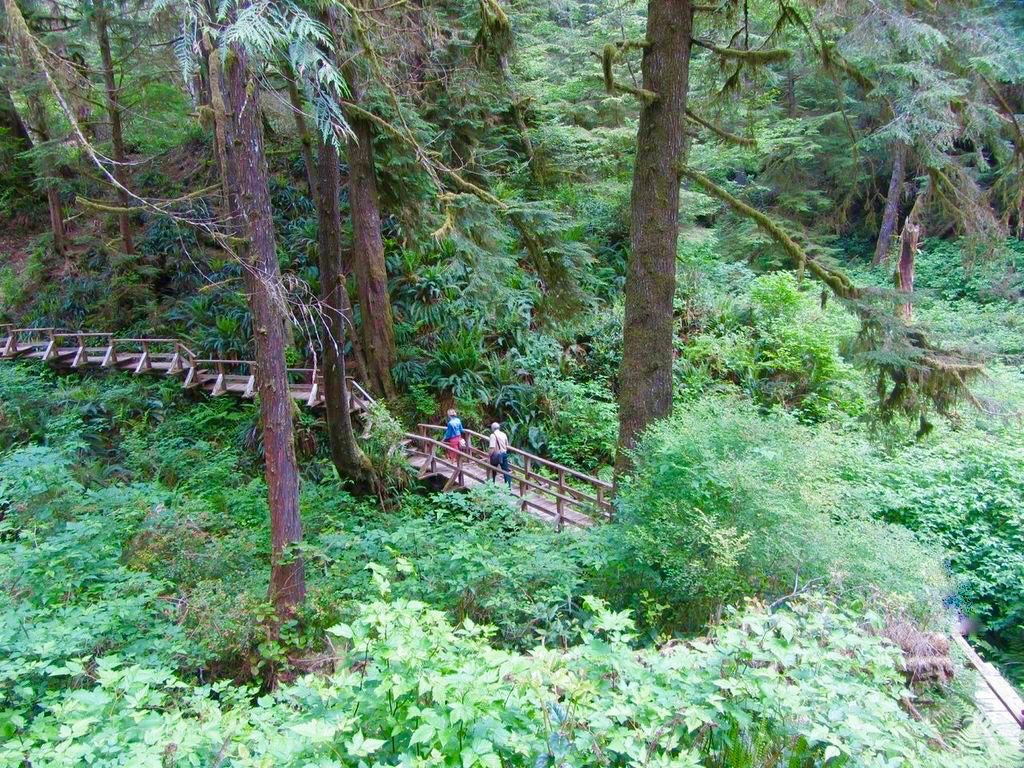
Ancient Forests, Living Legends, and Private Nature Tours with EV Tours
Trees on Vancouver Island and Victoria tell some of the deepest stories on the West Coast. The Island is known for its rugged coastline, wildlife, and world famous gardens, but its trees reveal an even older history. Some of the trees here are older than Canada itself, standing long before European ships reached these shores. Others played an essential role in Indigenous food systems, spiritual traditions, shelter, transportation, and carving practices for thousands of years. If you visit Vancouver Island, the forests deserve your time. At EV Tours, many guests are surprised to discover how one remarkable tree can open the door to the history, culture, and spirit of Vancouver Island.
The Forests That Define Vancouver Island
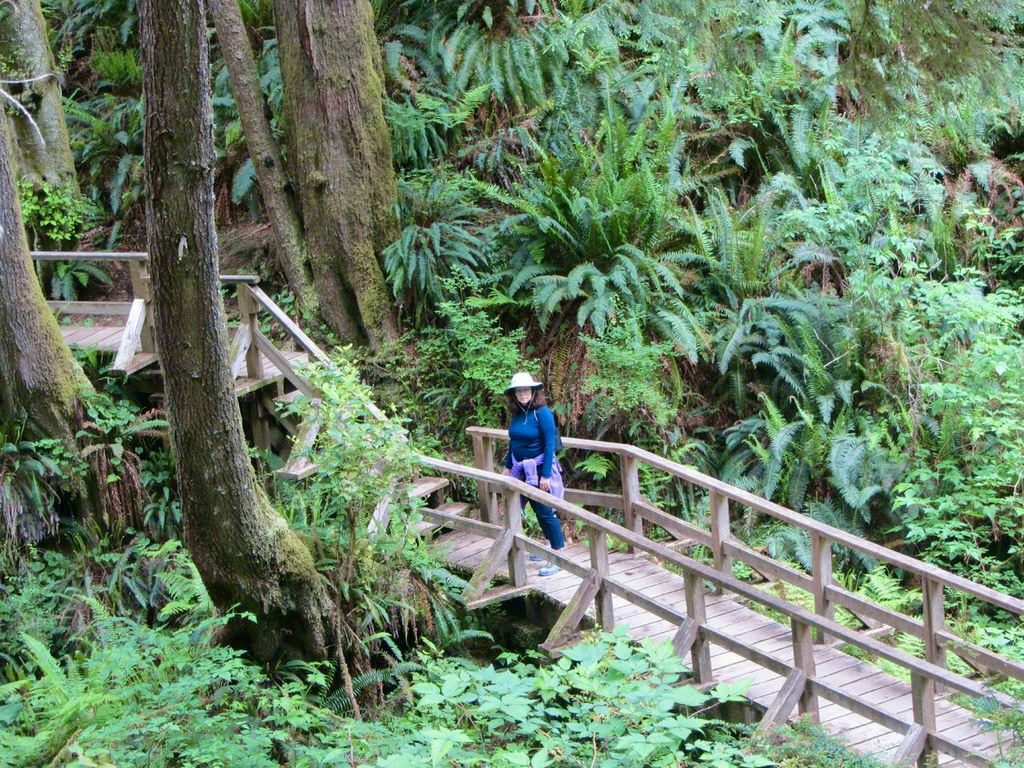
Vancouver Island sits within one of the world’s great temperate rainforest regions. The island supports ancient stands of western red cedar, Douglas fir, Sitka spruce, arbutus, yew, bigleaf maple, and Garry oak. Some of these trees reach extraordinary heights. Others grow twisted and wide, shaped by ocean winds and dry coastal summers. Together, they create landscapes found nowhere else in Canada. Visitors often arrive for whale watching or gardens but they leave talking about the trees.
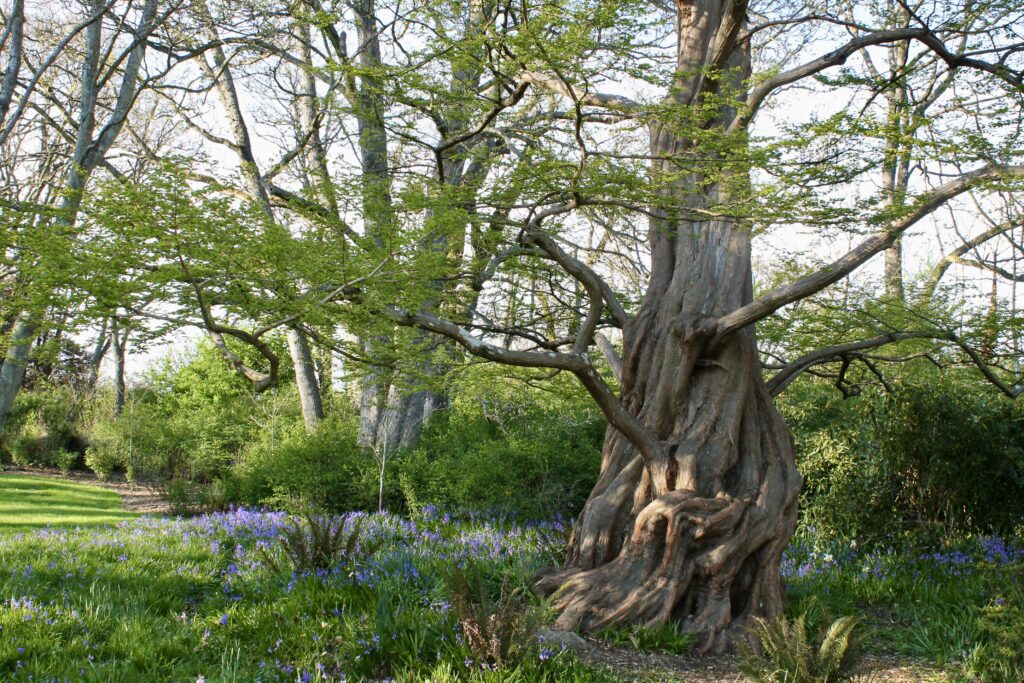
Garry Oak, the Tree of Southern Vancouver Island
The Garry oak is the only native oak in British Columbia. It grows mainly in southeastern Vancouver Island and the Gulf Islands. Its branches spread wide and low, its bark darkens with age. Its limbs often twist into dramatic shapes. The tree thrives in dry meadows and rocky slopes. It survives where other trees struggle. For Indigenous communities, these landscapes were not wild spaces. They were carefully managed cultural landscapes. For thousands of years, Coast Salish peoples used controlled burning. This kept meadows open and supported camas harvesting. The beautiful camas bulbs were also a major food source. The Garry oak ecosystem became part of a larger food and cultural system. Today, only a small portion of Gary oak savannahs remain intact.
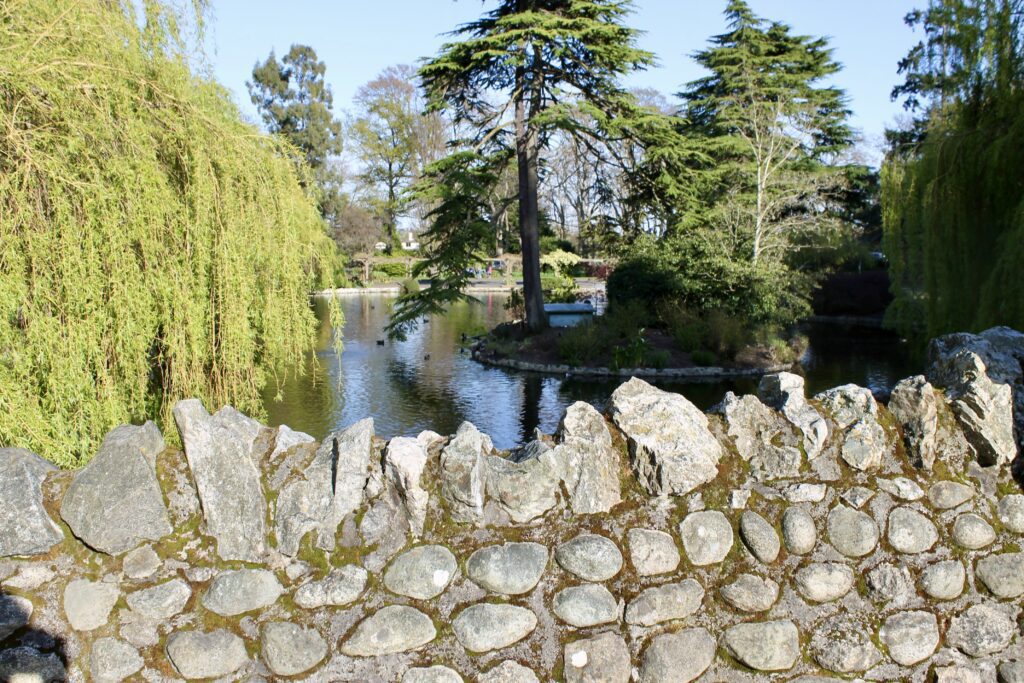
Beacon Hill Park, Gary Oaks, Weeping Willows, Sequoia and more
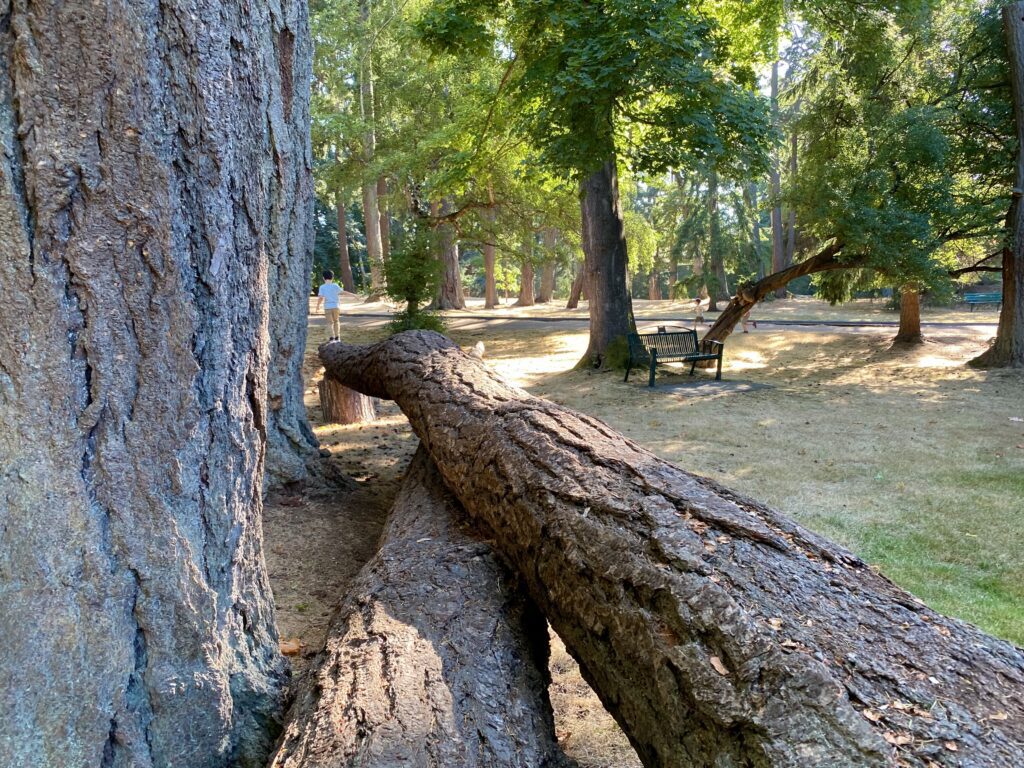
One of the best places to see Garry oaks is Beacon Hill Park. Created in the nineteenth century, the park protects important native meadows and woodland habitat. In spring, camas, blue and purple flowers bloom beneath the oaks and cover the ground. The effect feels almost Mediterranean. Yet the history is far deeper. Before Beacon Hill became a city park, this land held importance for local Indigenous communities. It was a place of gathering, food harvesting, and ceremony. Guests touring with EV Tours often stop here early in the morning. The light moves softly through the oak branches. Photographers love it. Writers love it even more.
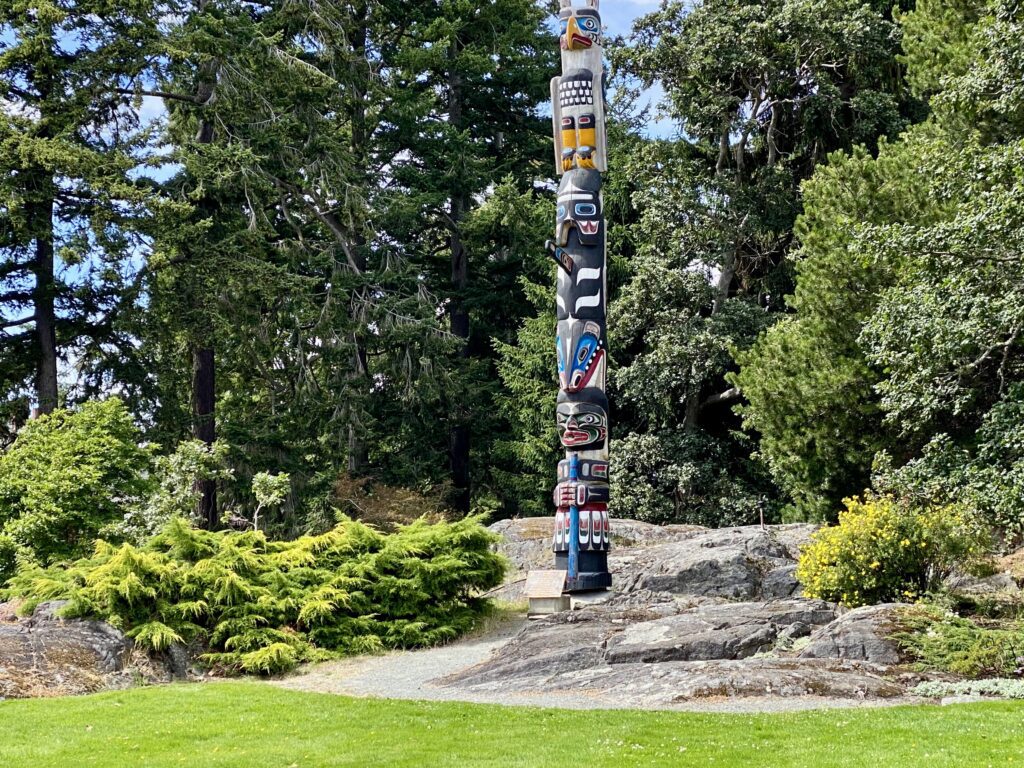
Western Red Cedar – The Tree of Life
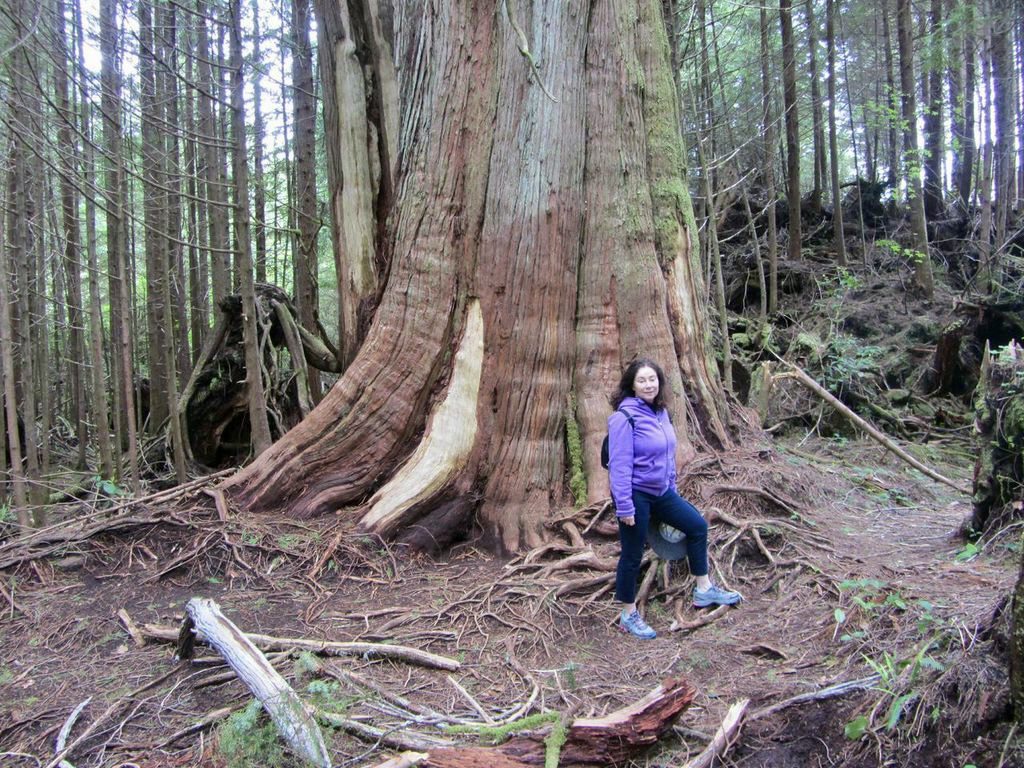
Few trees hold greater cultural meaning than the Western red cedar. Indeed, many Indigenous peoples across the Pacific Northwest call it the Tree of Life. However, for generations, cedar provided shelter, clothing, baskets, ropes, canoes, and ceremonial objects. In addition, its bark was carefully woven into practical and beautiful materials. Likewise, its strong wood became homes, longhouses, and seafaring vessels. Meanwhile, deep beneath the forest floor, its roots were shaped into tools and useful implements. Finally, in many communities, cedar also became art, including masks, ceremonial objects, and carved totem poles.
Totem Poles and Sacred Carving Traditions
The towering totem poles of the Pacific Northwest were often carved from old cedar. Historically, Native artists sometimes searched across Vancouver Island for trees suited for carving. Because cedar resists decay, it became ideal for cultural carving. It also splits cleanly and holds fine detail beautifully. Over generations, many nations, including the Haida Nation, the Kwakwaka’wakw, the Nuu chah nulth, and Coast Salish peoples, developed rich carving traditions. As a result, these poles recorded family histories, marked lineage, and honored ancestors. More importantly, they preserved stories, teachings, and identity in wood. Today, visitors in Victoria can still see cedar carving traditions in public art and cultural spaces.
When guests travel with EV Tours, we often discuss how forests shaped culture as much as climate did. Across Vancouver Island, many stories begin with trees. Indigenous peoples speak of cedar spirits and protector trees watching over villages. In many oral traditions, forests became teachers. A cedar might teach patience. An oak might represent endurance. A fir might symbolize resilience through storms. These stories were never simply decorative. They carried lessons and shaped relationships between people and place.
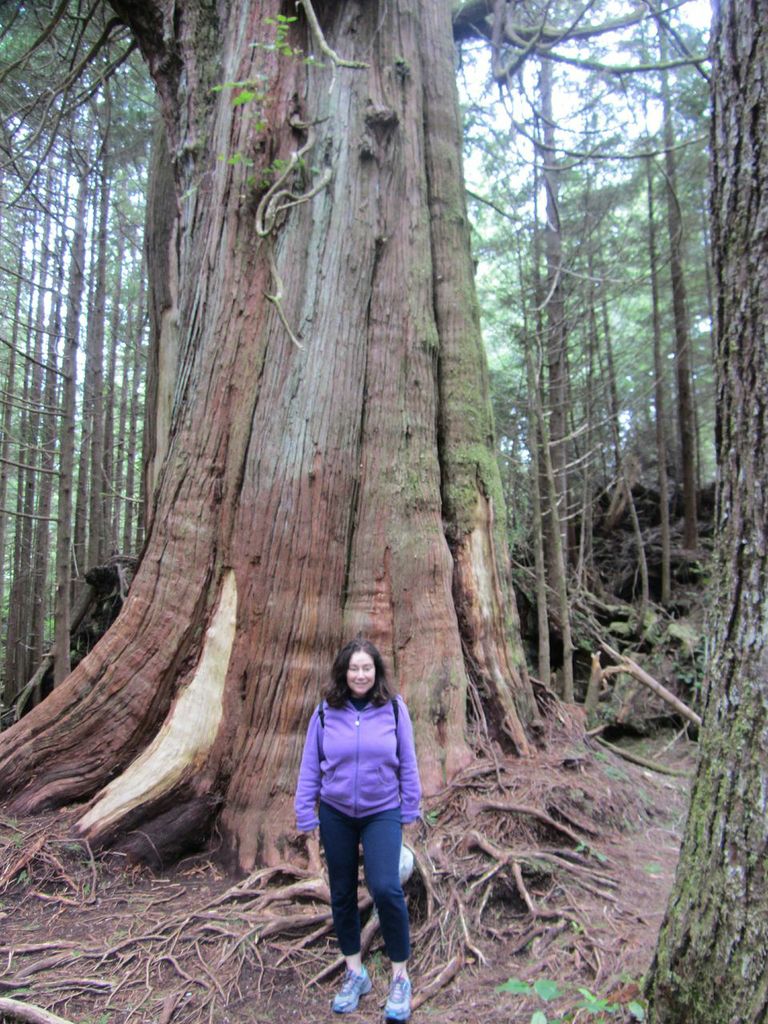
Cathedral Grove – Giants of the Island
One of Vancouver Island’s most famous forest destinations is Cathedral Grove. Located in British Columbia, this old growth forest contains Douglas fir trees that are hundreds of years old. Some exceed nine metres in circumference. Some reach over seventy metres in height. Walking among them changes your sense of scale. Voices soften. Footsteps slow. Even children go quiet. The forest feels like a cathedral, which inspired its name. Moist moss hangs from branches. Fern covered roots twist across the forest floor. Visitors often describe their experience in this forest as spiritual.
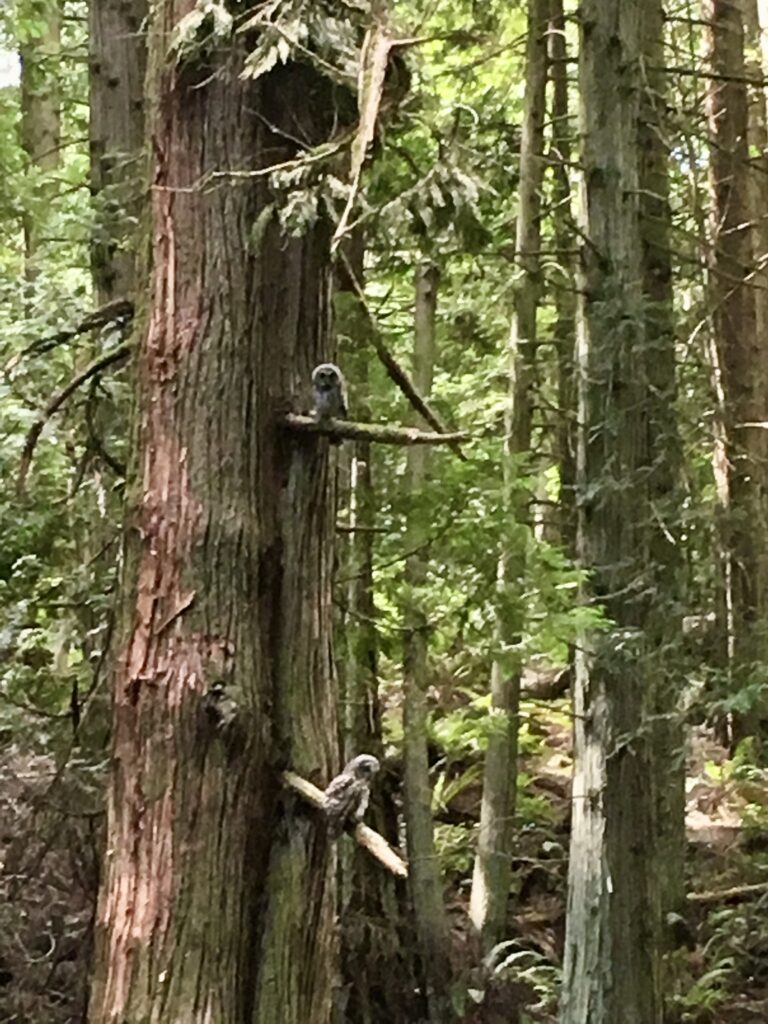
The Douglas Fir – Strength and HightThe Douglas fir is one of Vancouver Island’s signature giants. Some of the tallest recorded Douglas firs grow on this Island. Its wood helped build ships, homes, railways, and towns. Yet in old growth forests, the Douglas fir becomes something else. It becomes architecture. Its trunks rise like columns and its bark can grow thick enough to resist fire. Its lifespan can stretch beyond five centuries. Some of these firs stand much longer.
The Sequoia Surprise in Victoria
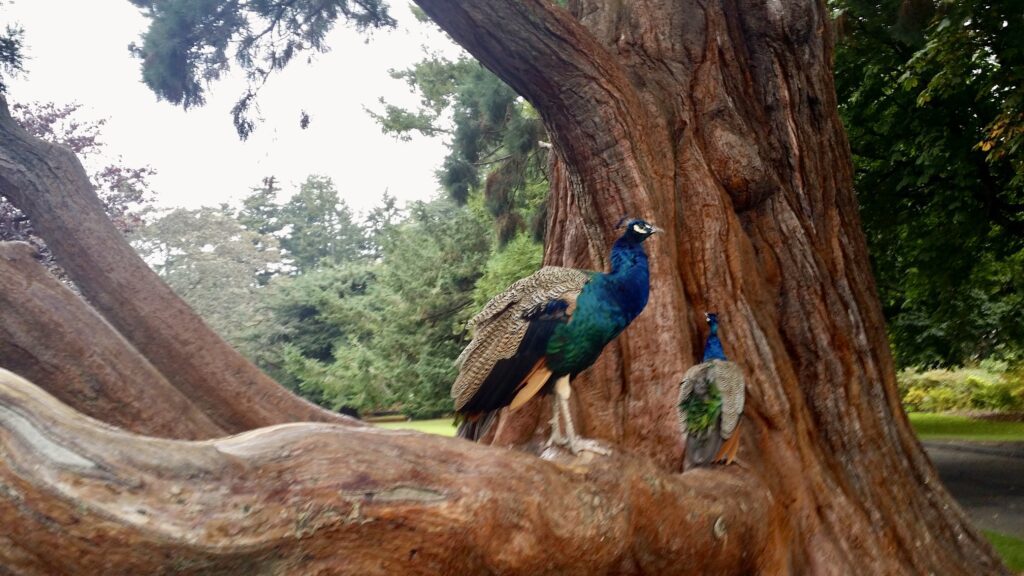
Many visitors do not expect to find Coast redwood or giant sequoias growing in Victoria. Yet several estates, gardens, and heritage properties contain these remarkable trees. Trees on Vancouver Island were imported in earlier generations with many now towering above surrounding gardens. Their bark feels soft and their trunks glow in warm evening light. Standing beneath them creates an entirely different feeling from native forests. They feel stately. Almost aristocratic.
Port Renfrew – Canada’s Tall Tree Country
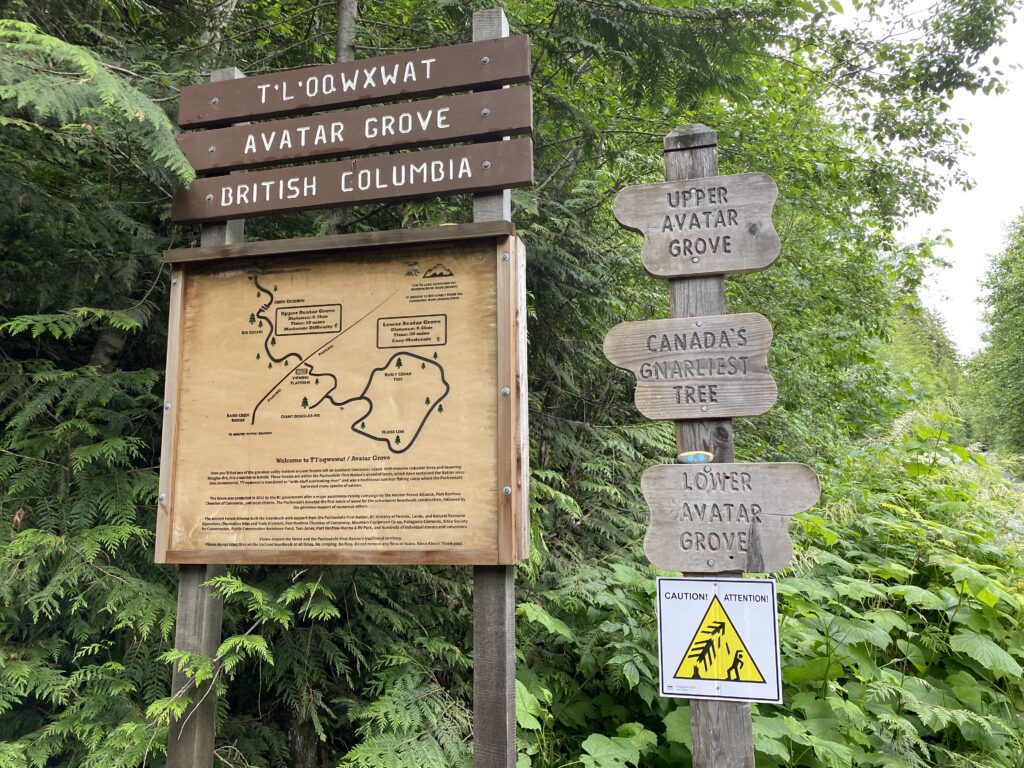
Port Renfrew proudly calls itself the Tall Tree Capital of Canada. And for good reason. This region protects some of the most famous old growth trees in the country. Massive cedars. Ancient firs. Trees so wide that families hold hands to circle them. Nearby forest giants have earned names. Names such as Red Creek Fir became known worldwide. These forests attract hikers, photographers, and conservationists. But they also attract travellers who simply want to stand beside something older than history.
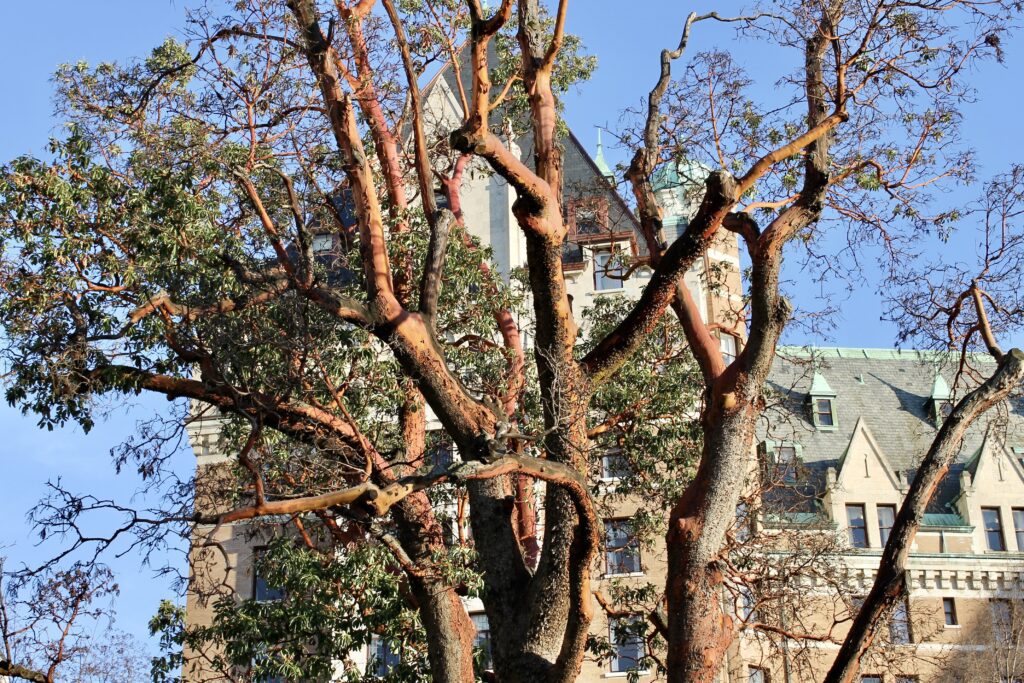
Along the coast of Vancouver Island, few trees are as distinctive as the arbutus. With its smooth cinnamon colored bark, twisting branches, and evergreen leaves, it often appears to be sculpted by wind and sea. Each summer, the bark naturally peels away in thin sheets, revealing fresh green layers beneath, one of the many reasons this tree captures so much attention. Found almost nowhere else in Canada except the Pacific coast, the arbutus thrives in rocky, sun drenched landscapes where many other trees struggle, making it one of the true symbols of the West Coast.
Discover Vancouver Island’s Trees
Trees shape the landscapes of southern Vancouver Island. Ancient forests, coastal parks, hidden gardens, and remarkable natural spaces await to be discovered. Wander through Garry oak meadows and remarkable gardens. Enjoy forest walks near Royal Roads University, scenic coastal drives, and heritage landscapes that define Victoria and southern Vancouver Island.
EV Tours takes you to explore forests and gardens, hidden landscapes and the heart of Victoria, BC.