
Emily Carr: Painter of Vanishing Worlds

In the annals of Canadian art history, few figures loom as large or as hauntingly as Emily Carr. Her life was a tumultuous journey marked by sadness, triumph, and an unyielding passion for painting and writing. Born in 1871, the same year that saw the birth of the province of British Columbia as it joined the Canadian federation, Carr’s life would become intertwined with the very fabric of her homeland on Vancouver Island.
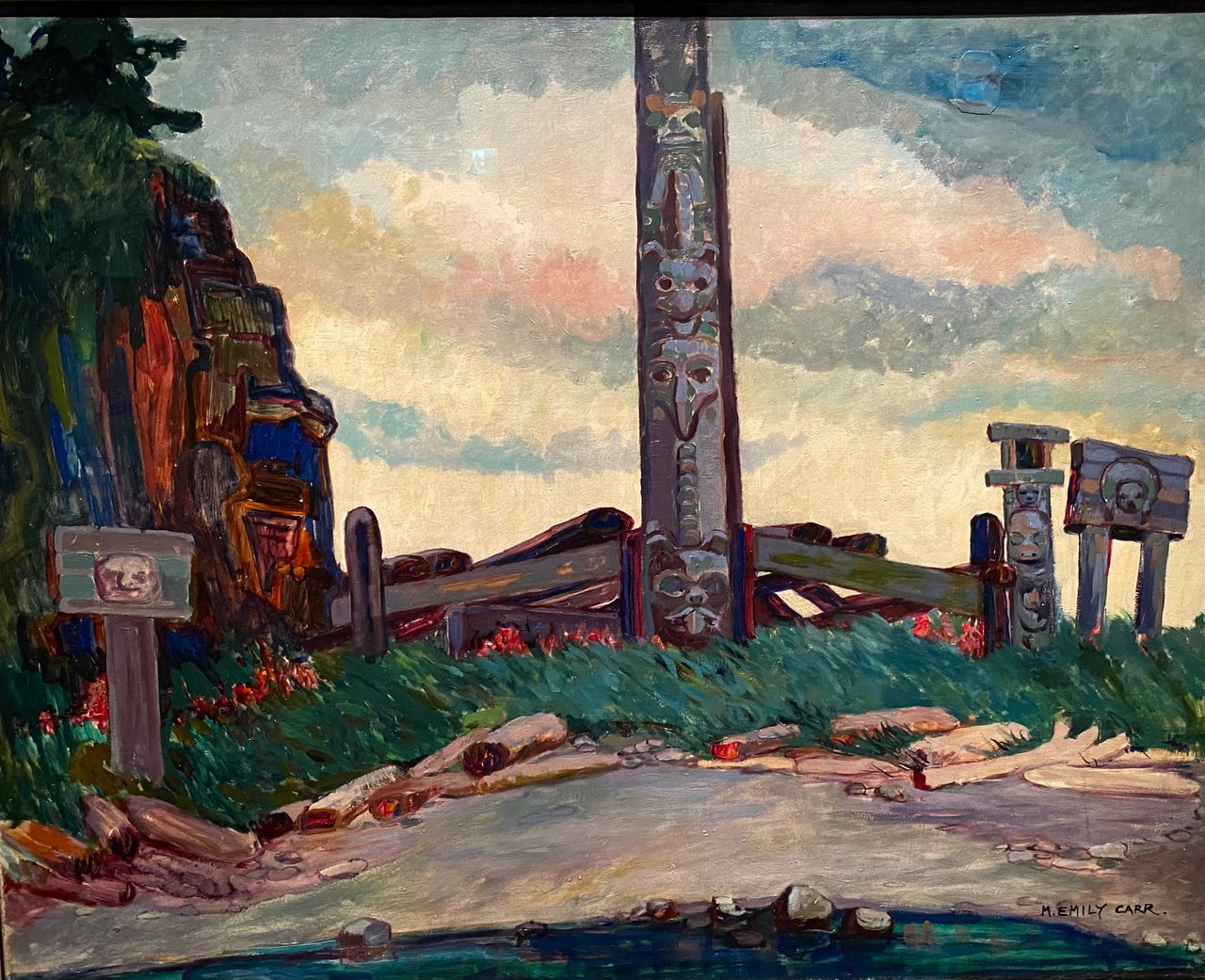
Emily Carr’s artistic journey was deeply rooted in the wild landscapes of Vancouver Island. Drawn to its ancient forests and remote coastal villages, she traveled extensively throughout the region, often venturing alone by canoe or on rugged trails. Her explorations led her to the abandoned Indigenous villages of the Northwest Coast, where weathered totem poles stood as silent witnesses to fading traditions. These encounters left a profound impression on Carr, inspiring a body of work that sought to capture the spirit and stories of these sacred places before they disappeared.
One of Carr’s most notable journeys took her to the northern reaches of Vancouver Island, where she documented the abandoned villages of the indigenous peoples in 1912, becoming one of the first artists to post-Haida artwork. These hauntingly beautiful scenes would become a recurring theme in her work, reflecting both the sadness of cultural loss and the resilience of the human spirit.
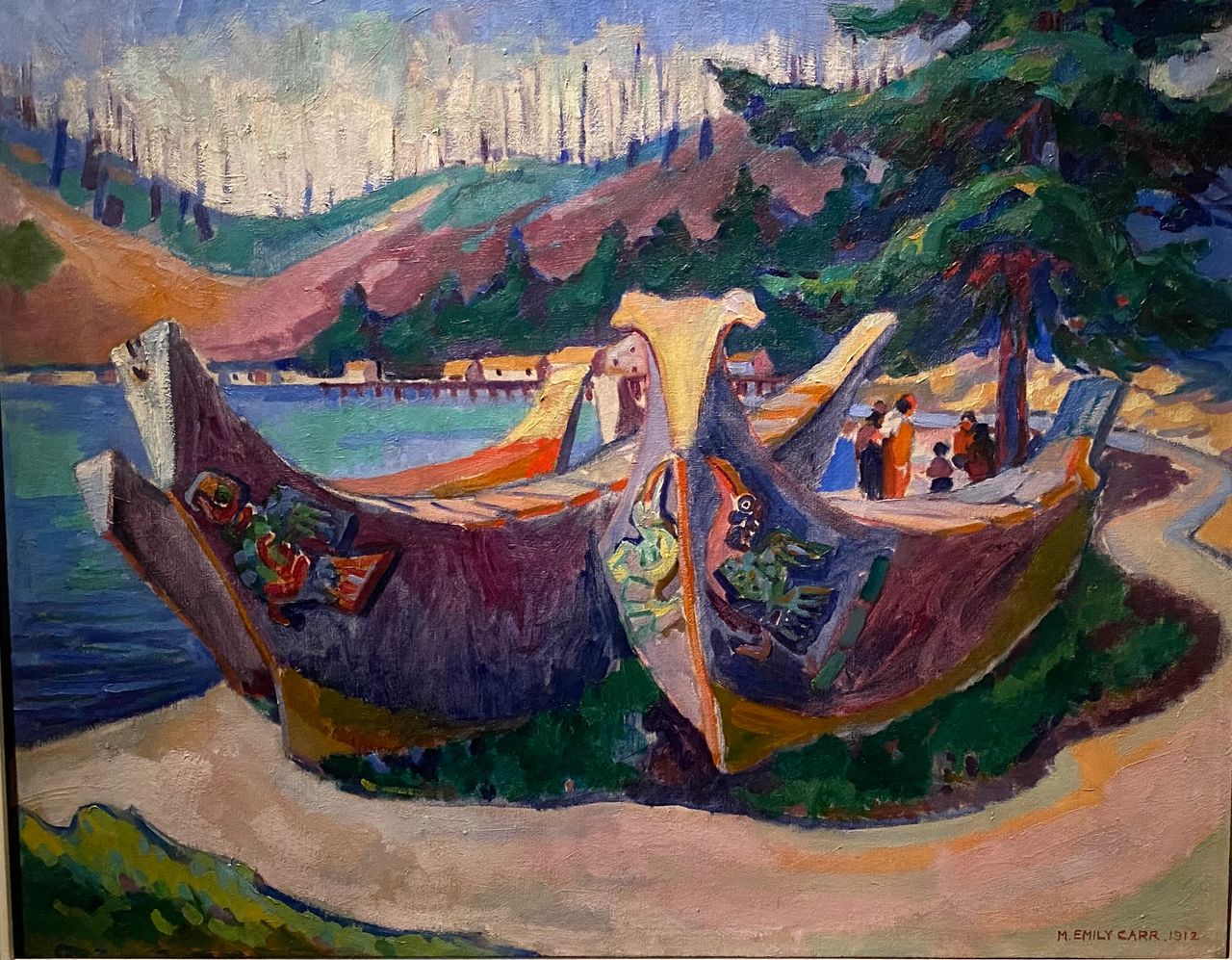
Where It All Began
Emily Carr’s journey into the artistic world began in earnest in 1894 when she embraced post-impressionism and traveled to London to further her studies. Her time in England was transformative, but Carr struggled to conform to the rigid constraints of the art school. Restless and eager for new experiences, she embarked on a journey with her sister, Alice, from Seattle to Alaska, determined to document the First Nations villages that dotted the coastlines along the way. This trip ignited Carr’s passion for indigenous art and culture, laying the groundwork for her future explorations and artistic endeavors.
As she traveled, Carr often found herself struggling against societal expectations and the limitations imposed on female artists of her time. Despite facing criticism and financial hardship, she remained steadfast in her commitment to her craft, eventually gaining recognition as one of Canada’s foremost painters.
Today, visitors to British Columbia can trace Carr’s footsteps through the homes and streets where she lived and worked. In Victoria, her childhood home has been preserved as the Emily Carr House -a National Historic Site-, offering a glimpse into the early years of this remarkable artist’s life. The streets of Vancouver are dotted with galleries showcasing her work, a testament to her enduring legacy in the Canadian art world. The Art Gallery of Greater Victoria (AGGV) has a notable collection of Emily Carr’s works. In fact, they hold one of the largest public collections of her paintings, drawings, and sketches. The gallery often displays a rotating selection of her art, offering insights into different phases of her career—from her early watercolours to her later iconic First Nation scenes.
#EmilyCarr #WomeninArt #CanadianArt #BCPrivatetours #VacationsinCanada #Privatetour #VictoriaBC
Private tours in Victoria, BC
Step into the world of Emily Carr and experience the city’s vibrant creativity firsthand with a private:
EV Tours: Emily Carr & Victoria’s Local Art Scene