
Honouring the First Peoples of Southern Vancouver Island

Southern Vancouver Island is known for its coastal beauty, historic charm, and vibrant cultural life. Yet long before any cities stood along its harbours, this land was home to some of the oldest and most resilient cultures in North America. To understand the true spirit of this place, one must begin with the voices of the First Nations peoples who have lived here for thousands of years.
June is National Indigenous History Month in Canada, a time to honour the heritage, contributions, and ongoing presence of Indigenous communities across the country. It is a moment to listen more closely, learn more deeply, and reflect on the stories that have shaped these lands long before Canada became a nation.
A History Rooted in the Land
The Lekwungen-speaking peoples, now represented by the Songhees and Esquimalt Nations, have inhabited the southern tip of Vancouver Island for 4,000 possibly 5,000. years. Their lives were guided by the rhythm of the seasons, shaped by the ocean’s tides, and deeply connected to the forests, salmon streams, and coastal inlets.
Long before European contact in 1774, these communities thrived through fishing, harvesting, cedar carving, and spiritual traditions passed down through generations. Their knowledge systems, social structures, and storytelling practices reflect a profound understanding of both place and people.
With the arrival of European settlers in the 18th and 19th centuries, their harmony was disrupted. Colonization brought profound changes, like disease, displacement, and policies that undermined Indigenous autonomy. Lands were taken, languages suppressed, and traditions challenged. The creation of reserves and the residential school system caused deep and lasting harm to Indigenous families and communities.
Despite this, the First Nations people of southern Vancouver Island remained resilient. Cultural practices were preserved in quiet, sometimes hidden ways. Elders became the guardians of language, tradition, and truth. Today, their stories are being told aloud again, as part of a wide movement of remembrance, pride, and renewal.
In recent years, the Province of British Columbia has taken active steps toward Reconciliation, acknowledging past injustices and working to restore respectful relationships with Indigenous communities. The Declaration on the Rights of Indigenous Peoples Act, passed in 2019, set a framework for aligning provincial laws with the principles of Indigenous self-determination.
Education programs, land acknowledgements, cultural funding, and collaborative governance are all part of this ongoing journey. It is not a quick fix, but rather a meaningful path shaped by listening, respect, and shared commitment.
The Meaning of Totem Poles
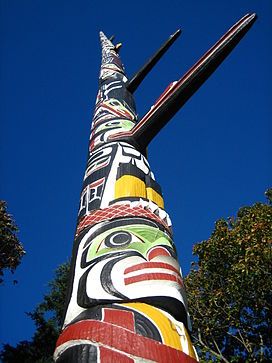
Among the most visible and revered cultural expressions of the First Peoples are totem poles. These monumental carvings are more than art. They are record-keepers, storytellers, and emblems of identity.
Totem poles often commemorate ancestors, mark important events, or represent spiritual beings connected to family histories. Contrary to some early misunderstandings, they are not idols or religious objects, but symbolic expressions of lineage, honour, and legacy.
Each figure carved into a pole, for example, the eagle, the bear, the raven, carries meaning that speaks to the community it represents. Totem poles are not meant to be read like books, but rather understood as stories carried in form and shape.
Beacon Hill Park and the World’s Tallest Totem Pole
In Beacon Hill Park, just a short walk from Victoria’s Inner Harbour, visitors can find one of the most extraordinary totem poles in the world. Carved by Kwakwaka’wakw artist Mungo Martin, along with David Martin and Henry Hunt, the pole was raised in 1956 and stands 39 metres tall.
It was a landmark moment: a celebration of Indigenous culture in a time when many aspects of it were still marginalized. The pole features figures such as the Thunderbird, the Sea Otter, and the Whale, each chosen with care and layered meaning.
To stand before it today is to feel both awe and humility. It is a reminder of the stories that were nearly lost, and the strength of those who ensured they would endure.
A Living Culture
Today, the First Nations of southern Vancouver Island are vibrant and active contributors to the region’s life. Artists, educators, knowledge keepers, and leaders shape the future while honouring the past. Visitors can learn through guided experiences, visit Indigenous galleries and markets, and walk respectfully on land that continues to be home to the descendants of those who first named it.
At EV Tours, we are honoured to guide guests through this region with respect and intention. During your private tour, you will have the opportunity to learn more about the First Nations of Vancouver Island, hear stories connected to the land, and gain a deeper understanding of the cultural layers that define this place. It is not just a journey through scenery it is a step into history that continues to live and breathe. We are grateful to work, live and enjoy in the territories of the First Nation peoples.
More information about our tours at www.evtours.ca